
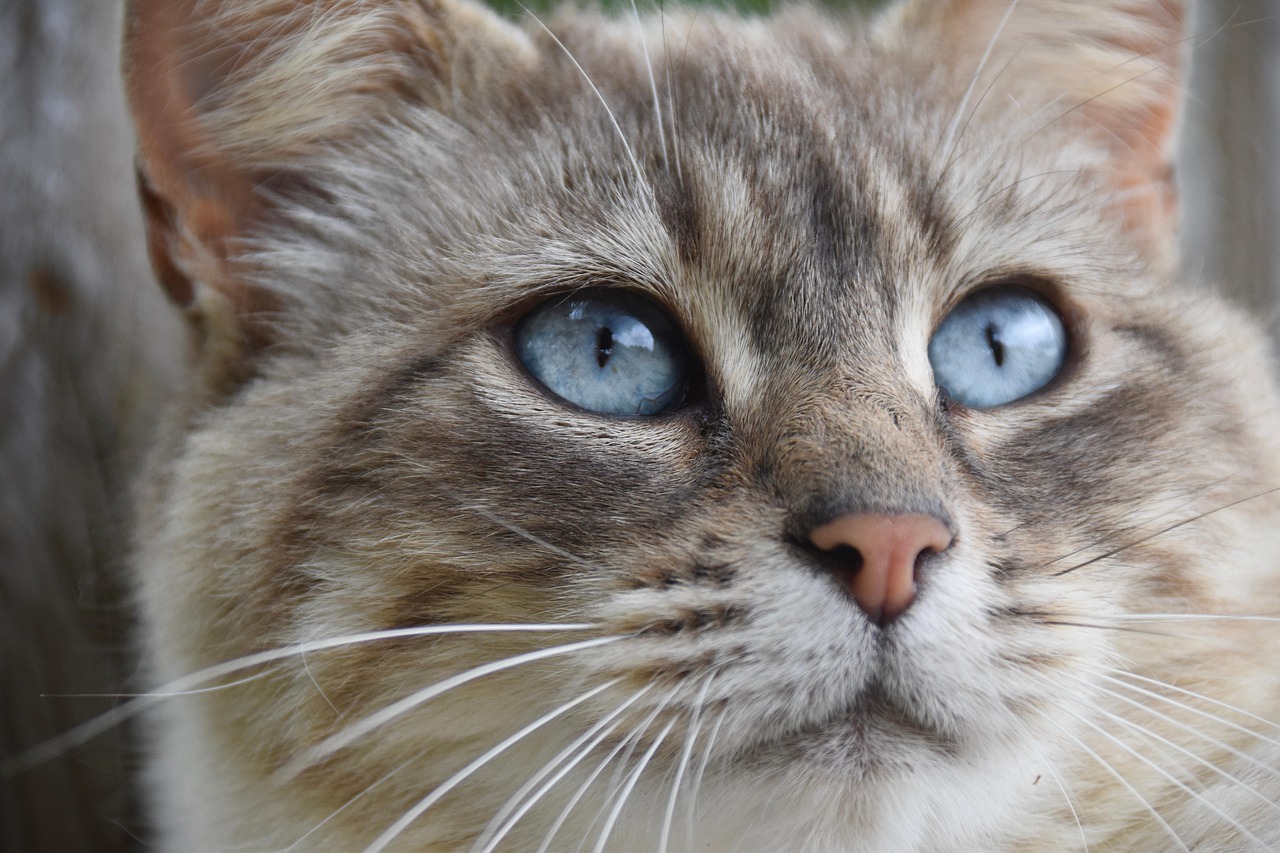
You are walking through a pitch-black hallway late at night when you suddenly see two glowing, neon-green orbs staring back at you from the dark. It looks like a scene straight out of a horror movie. But as you turn on the light, you realize it is just your family cat sitting calmly on the sofa. Watching your pet’s eyes flash like twin flashlights in the dark can be an eerie and startling experience. It is natural to wonder if your cat possesses a supernatural tracking ability, if the light is harming their vision, or if this glowing effect is a sign of an underlying eye disease. Fortunately, this eye glow is a masterpiece of evolutionary biology and predatory design. Your cat’s eyes are not actually producing light; they are reflecting it with incredible efficiency. This guide breaks down the physics of the feline eye, the hidden anatomy that gives them night vision, and what the specific color of the glow means for your pet’s health.
The Physics of the Flash: The 3 Biological Secrets of Feline Vision
Feline optical engineering is designed to capture every single stray photon of light in the environment, turning complete darkness into a clear, navigable landscape. This process relies on three specific anatomical features:
- The Tapetum Lucidum (The Internal Mirror): The primary secret behind the glowing eye effect is a specialized retroreflector tissue layer located directly behind the cat’s retina called the tapetum lucidum. Think of this tissue like a tiny, high-powered mirror built into the back of the eye. When light enters a cat’s eye, it passes through the retina to form an image. Any light that isn’t absorbed bounces directly off the tapetum lucidum and travels back through the retina a second time, giving the eye muscles a second chance to see the image. The glow you see is the leftover light bouncing out of their eye, acting exactly like the reflective paint on highway road signs.
- Massive Pupil Expansion Limits: Cats possess large, vertical slit pupils that can change shape far more dramatically than human pupils. In bright sunlight, their pupils shrink to tiny vertical slits to protect their sensitive retinas from burning. In the dark, their pupils dilate into massive, completely round circles that cover almost the entire eye surface. This allows up to 135 times more light to flood into the eye compared to a human eye, maximizing their ability to catch moving prey in near-total darkness.
- Photoreceptor Rod Dominance: The back of every mammal’s eye contains two types of light-sensing cells: cones (which detect vibrant colors and sharp details) and rods (which detect basic shapes, motion, and low light). Humans possess an abundance of cones, giving us excellent daytime color vision. Cats, conversely, possess an overwhelming majority of motion-sensitive rods. This trade-off means cats cannot see colors like red or green very well, but they can detect the tiniest twitch of a mouse tail in a pitch-black basement.
The Color Code: What Does Green, Yellow, or Red Mean?
The exact color of the glow coming out of your cat’s eyes depends entirely on the chemical makeup of their tapetum lucidum, which contains varying amounts of minerals like zinc or riboflavin.
- Neon Green or Yellow: The most common reflection color for the vast majority of domestic house cats. This indicates a completely healthy, mineral-rich tapetum lucidum optimized for outdoor hunting.
- Bright Red or Pink: This distinct reflection color is almost always seen in blue-eyed cats, Siamese breeds, or albino felines. These cats possess a much weaker tapetum lucidum or lack pigment entirely in the back of the eye. The red color you see is actually the flashlight beam reflecting directly off the live blood vessels inside their eye tissue.
- One Eye Glowing, One Eye Dark: If you take a flash photograph of your cat and one eye glows bright green while the other eye remains completely dark or looks cloudy, it is a major warning sign. This indicates a physical blockage in the dark eye, such as an active cataract, a corneal ulcer, or an internal eye tumor that is blocking the light from hitting the internal mirror.
Quick Summary of Mammalian vs. Feline Vision
- Low-Light Visibility: Elite for cats (requires only 1/6th the light humans need). Poor for humans (prone to complete night blindness).
- Field of Vision Range: 200 degrees for cats (excellent peripheral tracking). 180 degrees for humans (limited side awareness).
- Color Perception: Limited for cats (see the world in shades of blue, gray, and yellow). Full for humans (can perceive millions of distinct color shades).
- Distance Focus: Blurry for cats (struggle to focus on objects past 20 feet). Sharp for humans (can focus clearly on objects miles away).
© 2026 Animal Optics Ledger. All Rights Reserved.
Disclaimer: The information provided on this website is for educational and entertainment purposes only. We are not licensed veterinarians, veterinary ophthalmologists, or medical professionals. The content on this site is not a substitute for professional veterinary advice, diagnosis, or treatment. A sudden change in your cat’s eyes, asymmetrical reflections, permanent pupil dilation in bright rooms, or white cloudiness can indicate advanced glaucoma, internal infections, or progressive blindness. This website will not be held responsible or liable for any actions taken based on the information provided in our articles. Always consult a qualified veterinarian regarding the specific optical health, vision changes, or medical needs of your companion animal.