
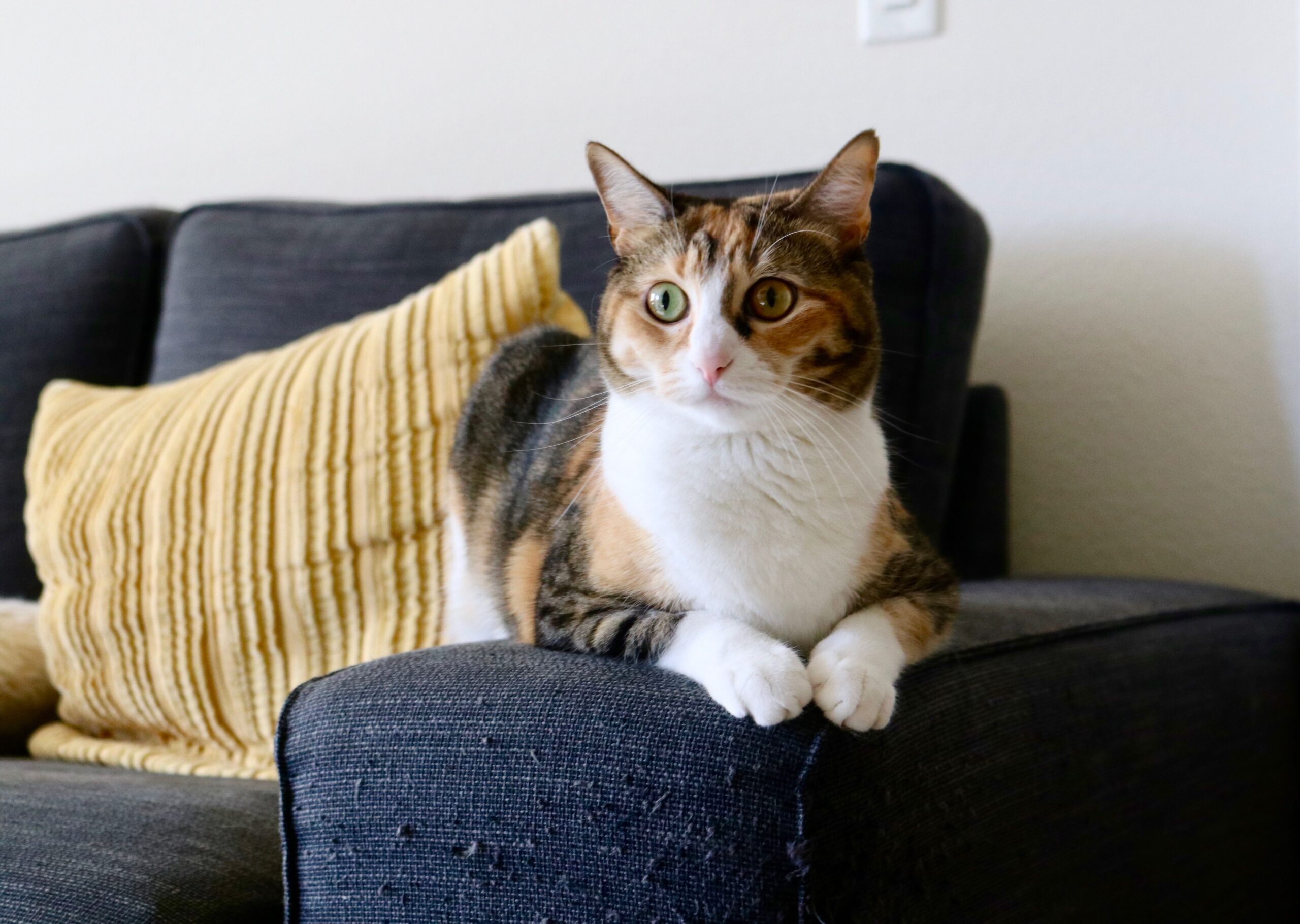
It is a frustrating moment for any cat owner: you buy a beautiful new couch, and within days, your cat has turned the fabric arms into a shredded, ragged mess. No matter how many times you yell, clap your hands, or shoo them away, they return to the exact same spot to scratch again.
Watching your furniture get destroyed can make you feel angry and helpless. You might think your cat is acting out of spite, anger, or boredom.
However, scratching is a deeply hardwired instinct that is completely vital to a cat’s physical and mental health. They are not trying to ruin your home; they are simply fulfilling a natural biological need. This guide breaks down the real reasons behind this behavior, why traditional punishments fail, and how to successfully redirect your cat to save your furniture.
The Top 4 Reasons Why Your Cat is Scratching
Cats do not scratch to sharpen their claws in the way humans file their nails. Instead, this action serves several critical functions in a cat’s daily life:
- Maintaining Nail Health and Shedding Husks
A cat’s claw grows in layers, similar to an onion. As new growth happens, the outer layer of the claw becomes dead, dull sheath material. Scratching against a rough surface is the physical mechanism cats use to loosen and peel away these dead outer husks. This reveals the sharp, healthy new claw underneath. Without a proper surface to scratch, these husks can become impacted, causing discomfort or infection. - Marking Territory Through Scent and Visual Cues
Cats are highly territorial animals that communicate through hidden signs. They have specialized scent glands embedded directly inside the pads of their paws. When a cat drags their claws down your sofa, they leave behind two strong territorial markers: a clear visual scratch line that says “this space is occupied,” and an invisible pheromone scent deposit that tells other animals exactly who owns the room. - Vital Stretching and Muscle Toning
Scratching is a full-body workout for a cat. When they reach high up on the arm of a couch and pull down, they are deeply stretching and flexing the muscle groups in their front legs, shoulders, and spine. This stretch is crucial for maintaining flexibility, improving circulation, and keeping their hunting muscles toned, especially after long hours of sleeping. - Emotional Release and Stress Management
Cats frequently scratch when they experience sudden bursts of high emotion. You might notice your cat frantically scratch a post right after you walk through the door, or immediately after a high-speed play session. Scratching serves as a healthy physical outlet to release excess energy, anxiety, excitement, or minor stress.
The Real Danger: Why Declawing is Not the Solution
When furniture damage becomes severe, some owners consider a surgical procedure known as declawing. It is vital to understand the true medical impact of this operation:
- Amputation, Not a Nail Trim: Declawing is not a simple medical removal of the nail. It is the surgical amputation of the last bone of each toe on a cat’s paw. If performed on a human, it would be equivalent to cutting off each finger at the very first knuckle.
- Chronic Pain and Behavioral Backlash: Declawing completely alters how a cat’s paw meets the ground, forcing them to walk awkwardly. This frequently leads to early-onset arthritis, chronic back pain, and intense physical discomfort.
- Increased Biting and Litter Box Issues: A cat that cannot scratch loses its primary defense mechanism and territorial tool. These cats often become highly insecure and resort to aggressive biting to protect themselves. Furthermore, digging in clay litter box substrate becomes incredibly painful for amputated toes, causing many declawed cats to stop using the litter box entirely.
How to Protect Your Furniture: A Step-by-Step System
You can never stop a cat from scratching, but you can easily control what they scratch. Follow this method to save your home:
- Identify Their Scratching Profile
Cats have strict layout preferences for their stretching routines. Watch your cat closely to figure out their favorite style:
- Vertical Scratchers: These cats love stretching upward against tall walls, door frames, or soft couch arms. They require sturdy, tall vertical posts.
- Horizontal Scratchers: These cats prefer staying flat on the floor, dragging their claws across carpets or rugs. They require flat cardboard scratchers or floor mats.
- Match the Texture Material
Cats are highly selective about texture. If they are currently scratching a fabric couch, buy a sisal rope post or a heavy woven fabric post. If they are scratching wood door frames, look for real wood scratching logs. The replacement item must feel better to their paws than your furniture. - Make Your Furniture Taste and Feel Terrible
While introducing the new scratching posts, apply temporary deterrents to the target furniture zones:
- Double-Sided Sticky Tape: Apply heavy-duty double-sided pet training tape to the specific areas your cat scratches. Cats hate the sticky sensation on their paw pads and will immediately walk away.
- Citrus Scented Sprays: Cats possess an incredibly sensitive sense of smell and absolutely despise the scent of citrus. Spray plain lemon or orange water spray on the fabric surfaces to create a natural scent barrier.
- Position and Reward
Place the new, sturdy scratching post directly in front of the furniture piece your cat was destroying. Do not hide the post in a dark corner of the house; cats want to mark high-traffic areas. Rub organic catnip or spray silvervine extract onto the new post to draw them in. When you see them use it, reward them with a favorite high-value treat immediately.
Quick Guide to Scratching Post Requirements
| Feature | Correct Setup | Dangerous/Incorrect Setup |
|---|---|---|
| Stability | Heavy, solid base that never wobbles or tilts when pulled. | Lightweight posts that tip over and scare the cat. |
| Height | At least 32 inches tall so the cat can stretch their full spine. | Short posts that force the cat to crouch awkwardly. |
| Material | Rough sisal rope, natural bark, or dense corrugated cardboard. | Soft carpet loops that catch and painfully rip cat claws. |